 Las Cruces Stucco Repair
 Stucco Patching in Las Cruces
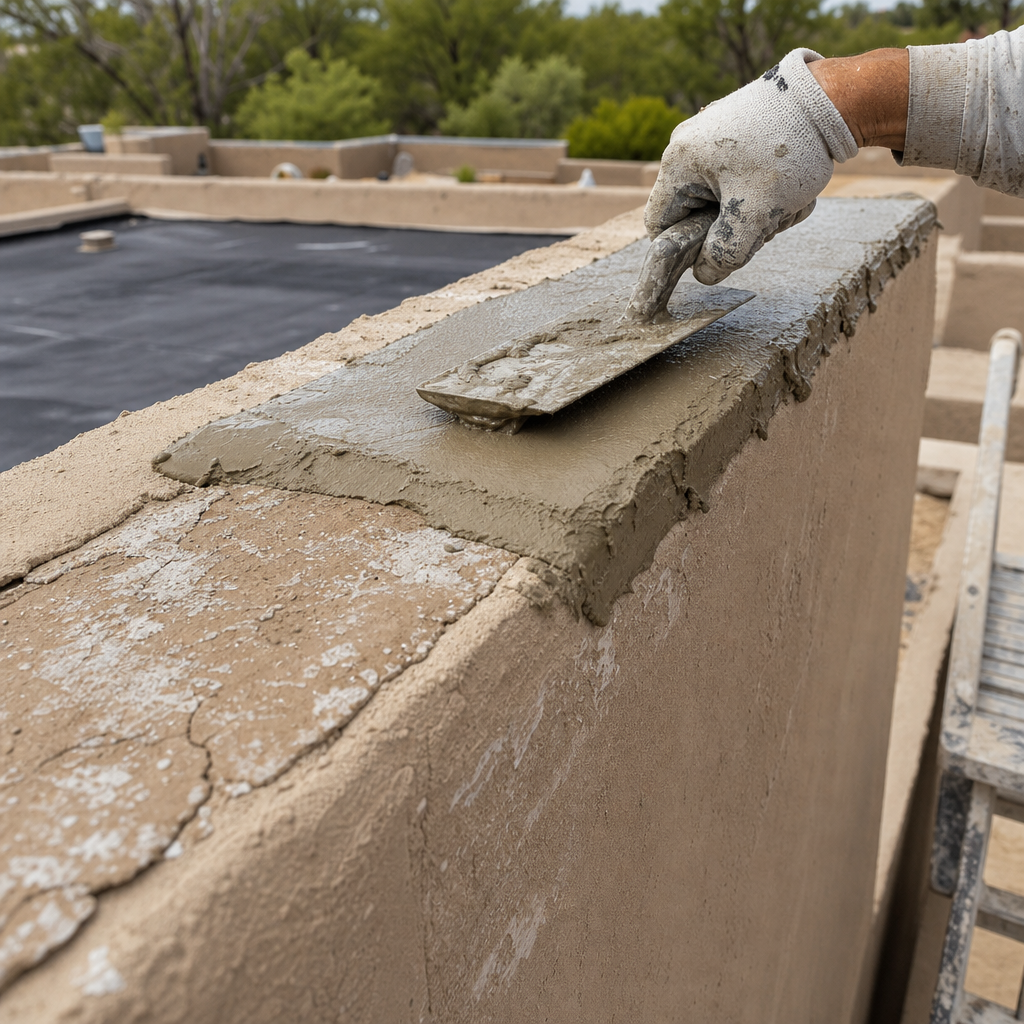
Stucco patching in Las Cruces runs $500–$2,000 for typical jobs, $8–$15 per square foot, and covers the failures a crack fill can’t: blown-out areas with lath showing, hollow delaminated sections, and water-damaged walls that have gone soft. A real patch rebuilds every failed layer, paper to finish coat, so the wall sheds water again. Send photos of the damage and get a straight quote.
Patching is the heart of the stucco trade, and it’s also where the most money gets wasted in this valley, because a bad patch looks fine for about a year. Here’s what separates a rebuild from a smear, and what your specific damage probably involves.
What patching fixes (and what causes it here)
Water-damaged walls. The big one in Las Cruces. Flat-roof homes drain through canales, and when a canale rusts or its flashing fails, roof water pours down the stucco face, every storm, all monsoon. The tell is a vertical stain fanning out below the spout with soft, hollow stucco behind it. Same story below cracked parapet caps: the water enters at the top and delaminates the wall from inside. In Mesilla Park, the Alameda district, and the older midtown grid, this is the default patch job. (If the top of the wall is the cause, that needs fixing too, see parapet repair.)
Sprinkler and drainage damage. A sprinkler head that mists the same wall corner every morning for ten years will soften cement stucco at the base. You’ll see efflorescence (white mineral bloom), staining, and eventually crumbling. Wall bases in the valley’s older irrigated neighborhoods take this constantly. The patch includes redirecting whatever’s wetting the wall, or it’s a subscription, not a repair.
Impact damage. Hail, a ladder, a backing trailer, a basketball hoop’s greatest hits. On pre-2000 three-coat walls this is usually localized and clean to fix. On newer one-coat homes in Sonoma Ranch and the East Mesa, the same impact does more, because there’s only about a half-inch of cement over foam, impacts crush through to the sheathing more easily.
Bird damage. Northern flickers drill nesting holes in stucco walls, typically up high, under eaves, sometimes straight through to the cavity. Las Cruces gets its share. The patch is standard; the prevention conversation (deterrents, timing around nesting season) comes free.
Old failed patches. Walls that were “repaired” with surface skims, caulk sculptures, or mismatched mortar. The right fix cuts out the previous attempt along with the original failure and does it once.
Why cutting back to sound material is non-negotiable
Stucco is a layered system: weather-resistive paper against the framing, wire lath, a cement scratch coat keyed into the lath, a brown coat floated flat, and the finish coat. It sheds water because every layer laps correctly over the one below. When a wall fails, the failure is almost never just the surface. The paper is torn or rotten, the lath is rusted, the basecoats are debonded.
A patch that only replaces the visible surface leaves all of that in place. The result is predictable: the patch hosts the same failure within a couple of seasons, except now the water damage is a year older. So the first real step of every patch is demolition: saw-cut past the visible damage, chip out to solid, well-bonded stucco, and get eyes on the paper and lath. Sometimes that reveals the damage is smaller than it looked. Sometimes it reveals the water traveled further than anyone hoped. Either way, you want to know, because the alternative is paying to hide it.
The rebuild, step by step
- Sound and mark. Tap out the full hollow area, it’s always bigger than the visible hole, and saw-cut a clean perimeter into sound material.
- Demo and inspect. Failed stucco out, rusted lath out, rotten paper out. Framing and sheathing get checked while the wall is open; if there’s rot, you find out now, not after it’s sealed back up.
- Rebuild the weather barrier. New paper lapped shingle-style into the existing so water can’t get behind it, new galvanized lath tied into the old, flashing corrected at any parapet, canale, or penetration in the patch zone. This step is the entire difference between a repair and a redo.
- Scratch and brown coats, cured properly. Cement basecoats applied and moist-cured; the brown coat gets floated flush with the surrounding wall and left to cure before finishing. In our dry air and wind, skipping moist cure guarantees shrinkage cracks.
- Finish coat, matched. Texture replicated (sand float, skip trowel, smooth Santa Fe) and feathered into the surrounding wall, with color blended to the weathered wall rather than the original color chip. The honest limits of blending on faded walls are covered under color and texture matching.
One system rule is absolute: repairs stay system-consistent. A one-coat wall gets a one-coat-compatible rebuild; EIFS gets EIFS components: foam, mesh, polymer basecoat, acrylic finish. Patching EIFS with cement stucco (a depressingly common local shortcut) creates a hard-to-soft joint that cracks and funnels water into the foam.
What it costs
| Scope | Range |
|---|---|
| Typical patch job | $500–$2,000 |
| Larger areas | $8–$15 per sq ft |
| Service minimum (most crews) | $300–$500 |
Price moves on three things: how far the water actually traveled (the demo tells the truth), the system (three-coat vs. one-coat vs. EIFS), and access (ground floor vs. gable end vs. parapet line). If more than about a third of an elevation needs patching, stop and price a recoat or restucco instead, past that point, rebuilding the whole wall face is often the better money. The pricing page lays out both paths.
Get it scoped before monsoon
A hollow spot in May is a contained patch. The same spot after a monsoon of driving rain is a bigger patch with wetter framing. If your wall has staining, soft spots, or exposed lath, send photos now (wide shot, close-up, and one of whatever’s above the damage) for an honest scope. Patching is covered across Las Cruces, Mesilla, Doña Ana, Anthony, and Hatch, and if what you actually need is a $400 crack repair instead of a patch, that’s what you should hear.
Frequently Asked Questions
How much does stucco patching cost in Las Cruces?
Typical patch jobs run $500–$2,000, or $8–$15 per square foot depending on the system and access. The spread comes from what's behind the failure. A clean impact patch is the low end; a water-damaged area with rusted lath and rotten paper is the high end.
How do I know if my stucco is delaminating?
Tap it. Sound stucco raps solid; delaminated stucco sounds hollow, like knocking on a drum. Other tells: bulging, a soft spot that flexes under hand pressure, or staining with fine cracks radiating from it. Hollow areas grow, the next hard rain or freeze usually decides when they let go.
Can you patch over the damaged area instead of cutting it out?
No, and walk away from anyone who offers. Skimming over failed stucco traps the failure: the rusted lath keeps rusting, the wet paper keeps wicking, and the new material falls off with the old. A real patch cuts back to sound material and rebuilds every layer.
Why is there a stain and soft spot below my roof drain?
That's the classic canale failure. The drain spout through your parapet has rusted or lost its flashing, so roof water runs down the stucco face instead of clear of the wall. The vertical fan-shaped stain marks the path; the soft stucco behind it is the damage. The patch only lasts if the canale gets fixed too.
How long does a patch take?
Usually 2–4 days across two or three visits: demo and rebuild of paper and lath, scratch and brown coats with moist curing between, then the finish coat once the brown coat has cured. Rushing the cure is exactly what makes patches shrink-crack within a season, so don't let anyone rush it.