 Las Cruces Stucco Repair
 Stucco Crack Repair in Las Cruces
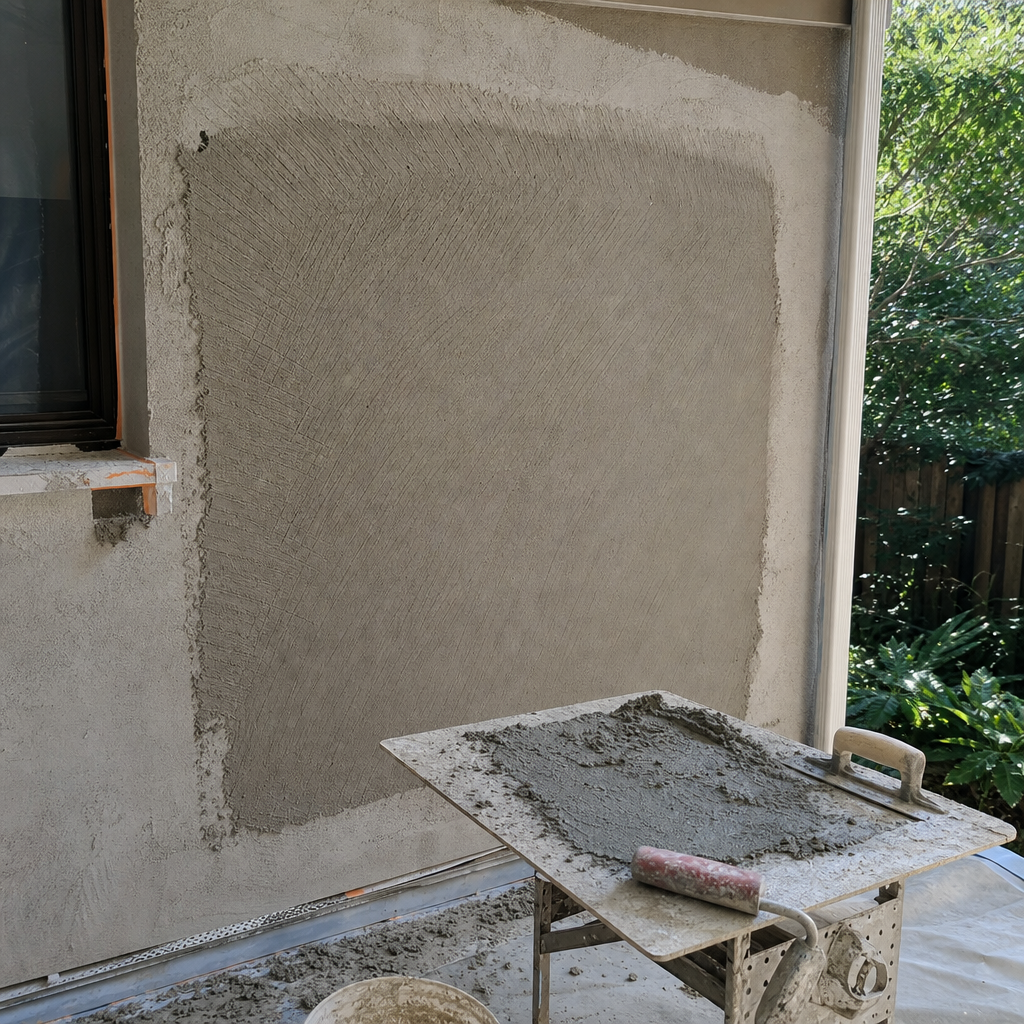
Stucco crack repair in Las Cruces runs $200–$800 for typical jobs (hairline to moderate cracks cut open, filled compatibly, and refinished with matched texture) with larger cracked areas at $8–$20 per square foot. Most of the work is sorting your cracks into three piles: the cosmetic ones, the ones letting water in, and the ones that signal movement no filler can cure. Photos are the place to start sorting out which you have.
Cracked stucco is the most common exterior complaint in the Mesilla Valley, and no wonder: nearly every wall in Las Cruces is stucco, and the local climate is a crack-making machine. Here’s how to sort it, fix it, and keep it fixed.
Why Las Cruces stucco cracks
Thermal cycling, every single day. At roughly 3,900 feet with dry desert air, Las Cruces swings 30–40 degrees between afternoon and dawn most of the year. The cement finish coat expands and contracts through every cycle, and over years the accumulated stress relieves itself as map cracking, the fine spiderweb you’ll find on almost any elevation over 15 years old, from the Telshor corridor to Mesilla Park.
Freeze-thaw does the widening. Las Cruces freezes dozens of nights each winter, and occasionally hard, the February 2011 arctic event dropped Las Cruces to 5 below zero. Water sitting in a hairline crack expands about 9% when it freezes and pries the crack wider. Each winter cycle feeds more water into a slightly bigger crack. That’s how a cosmetic hairline becomes a repair in two or three seasons, and why fall is a smart time to seal.
Ground movement. The valley floor’s soils and the East Mesa’s sandier ground move differently, but both move, especially where drainage dumps roof water at the foundation. Settling shows up as stairstep cracks along block cores and diagonal cracks running off window and door corners. Newer one-coat homes in Sonoma Ranch and High Range telegraph this faster because the cladding is only about a half-inch thick.
Failures above. A cracked parapet cap or a rusted canale feeds water into the wall core, and the wall cracks from the inside out, usually with staining. If your crack sits below a parapet or drain spout, the crack is the symptom; the fix starts at the top. That’s parapet repair territory, not a symptom patch.
Reading the crack: a triage
- Map / spiderweb cracking: finish-coat fatigue. Cosmetic today, but each line is a capillary for monsoon rain. Once it covers a whole wall, an elastomeric coating or a recoat usually beats going after each line one at a time.
- Straight vertical or horizontal hairlines: usually the original coat shrinking as it cured; they tend to sit still, carry little risk, and can be sealed whenever it suits you.
- Diagonal cracks off openings: stress gathers at the corners of windows and doors, so these usually mean something is moving. Monitor the width, check the foundation line, and fix with reinforcement, not just filler.
- Stairstep cracks: following the mortar joints of block construction underneath. Movement until proven otherwise.
- Cracks with staining or hollow stucco below: the water has already gotten in. What looks like a crack is really a patching job, and pricing it as a simple fill would leave most of the work out.
How a crack gets repaired properly
- Trace it to the cause. Sound the wall around the crack for hollow spots and follow the crack to its origin: cap, canale, sprinkler head, foundation, window corner. No cause identified, no lasting repair.
- Open the crack. A hairline gets cleaned and keyed; a structural crack gets ground or saw-cut to a shape that filler can actually grip. Painting over a closed hairline is theater.
- Fill compatibly. We pick between a cement-based fill and a flexible sealant based on whether the crack has stopped moving or is still working. A working crack needs a filler with elasticity, or it just re-cracks beside the repair.
- Reinforce when movement is present. We bed mesh across the crack so any later stress spreads out over the wall rather than piling onto that single line.
- Refinish and blend. Texture matched (sand float, skip trowel, or smooth) and color blended to the weathered wall, judged dry and in daylight. On faded elevations, be realistic: a perfect disappear isn’t always possible, and the color-matching page explains the honest options.
The one thing never to accept is a skim over a soft spot. If the stucco around the crack sounds hollow, the delaminated material comes out and it’s rebuilt as a patch, otherwise you’ve paid for a repair over a failure.
Same crack, different wall: three-coat, one-coat, and EIFS
The repair method follows the wall system, so yours should be identified before anything gets cut:
- Traditional three-coat: roughly 3/4” of cement over paper and lath, standard on pre-2000 Las Cruces homes and most pueblo-style builds. All that cement gives some margin, since cracks tend to stop inside the cement layers, so the steps above (open, fill, reinforce, refinish) work as listed.
- One-coat: a single ~1/2” basecoat over foam sheathing, common on newer Sonoma Ranch, High Range, and East Mesa homes. Cracks reach the foam faster, so the area behind the crack line should be probed before filling; a crack that’s let water to the sheathing is a patch, not a fill.
- Synthetic (EIFS): a polymer skin, only a thin one, over foam board. On EIFS the cracks tend to follow the mesh laps and the sealant joints, and we repair them in kind with polymer basecoat, embedded mesh, and an acrylic finish. Cement filler in an EIFS crack is a defect, the mismatched joint traps water against the foam.
And if the wall behind your “stucco” is true adobe, a live possibility in Mesilla and Doña Ana village, crack filler isn’t the conversation at all. Adobe repairs breathe or they fail; see the Mesilla page for that fork in the road.
What it costs
| Scope | Range |
|---|---|
| Typical crack job (one visit + finish return) | $200–$800 |
| Larger cracked areas | $8–$20 per sq ft |
| Service minimum (most crews) | $300–$500 |
The drivers are length, width, cause, and access. A ground-floor hairline is the bottom of the range; a working diagonal crack at a second-story window corner with reinforcement is the top. Every number we publish sits on the pricing page. Got several cracks? Have them done on one trip, because paying one service minimum for five small cracks is far better than paying five. Crack repair is the affordable rung of this trade for a reason, it’s the repair that keeps the wall from ever needing the expensive ones.
Timing advice for a neighbor
Seal open cracks before July. Monsoon storms drive rain horizontally at walls that have baked dry since April, and every open crack drinks. Water that enters in August is the ice that widens the crack in January. If you missed the monsoon window, fall is the second-best time: dry walls, good curing temperatures, and the crack gets closed before winter freeze cycles. A stable hairline in October is no emergency, whatever a bidder says; some cracks genuinely can wait, and a straight contractor will say which ones.
Crack repair is covered across Las Cruces and the valley: Mesilla, Doña Ana, Anthony, and Hatch. Send a wide shot of the elevation plus a close-up with something for scale (a coin works), so we can give a straight answer on what matters and what it costs.
Frequently Asked Questions
How much does stucco crack repair cost in Las Cruces?
Typical hairline-to-moderate crack jobs run $200–$800. Larger cracked areas price at $8–$20 per square foot, and most crews carry a $300–$500 service minimum, so batching several cracks into one visit is the smart buy. Send photos and we can pin the range down quickly.
Which cracks actually matter?
Fine map cracking is cosmetic. Take seriously: cracks wider than a credit card edge, stairstep cracks tracing block joints, diagonal cracks growing off window and door corners, and any crack with staining or soft stucco below it. Those admit water or indicate movement.
Why do repaired cracks come back?
Two reasons. Either the repair was cosmetic, caulk or paint over an unprepared crack, or the crack has a moving cause: settling foundation, failed parapet cap, cracked bond beam. Filler can't hold a joint that's still moving. Know which case you have before any quote, and expect to hear it if patching alone won't fix it.
Can I just use hardware-store stucco caulk?
For a true hairline on a wall you plan to recoat soon, sure. It buys time. But caulk shows as a shiny smear, doesn't take texture, and traps a bad surprise if the crack is wicking water. A proper repair opens the crack, fills it compatibly, and refinishes with matched texture. Different product entirely.
Is crack repair different on EIFS or one-coat stucco?
Yes, the wall system decides the repair. Traditional three-coat cement takes the standard open-fill-refinish sequence. One-coat is only about a half-inch thick, so the foam sheathing behind the crack should be checked before filling. Synthetic EIFS cracks get repaired with EIFS polymer components, cement filler in an EIFS crack makes a joint that traps water and fails.
When should crack repair be done?
Before monsoon, ideally. July–September driving rain finds every open crack, and water that gets in this summer becomes the freeze-thaw expansion that widens the crack this winter. Cement work also can't happen in freezing temps, so spring and fall are the natural windows.